RiverFlow AI vs Claude: Which One Actually Builds Your Ad Creative?

Every performance marketer hits the same wall at some point. The strategy is solid, and the targeting is dialed in. Still, the campaign underperforms because the creative feels stale. Fixing that means two very different jobs get done at the same time — someone has to think (angles, hooks, positioning, persona-specific messaging) and someone has to make (finished, on-brand, platform-sized visuals ready to upload to Meta or TikTok).
That split is exactly why RiverFlow AI vs Claude keeps coming up in marketer Slack channels and Reddit threads. They get compared a lot, but they are not built for the same job. Once you know what each one does, the "which one should I use" question answers itself.
👉 Get 20% off RiverFlow AI here — our exclusive discount link.
In this guide, we'll break down what Claude is actually good at for ad copy and campaign strategy, what RiverFlow AI does for on-brand ad creative production, how their pricing compares, and — because this is the part most comparison articles miss — how to connect RiverFlow AI directly to Claude so you get both in one workflow.
What Each Tool Actually Is
Before comparing them head-to-head, it's worth being precise about what each product does in 2026, because the category lines have blurred.
What Claude Is
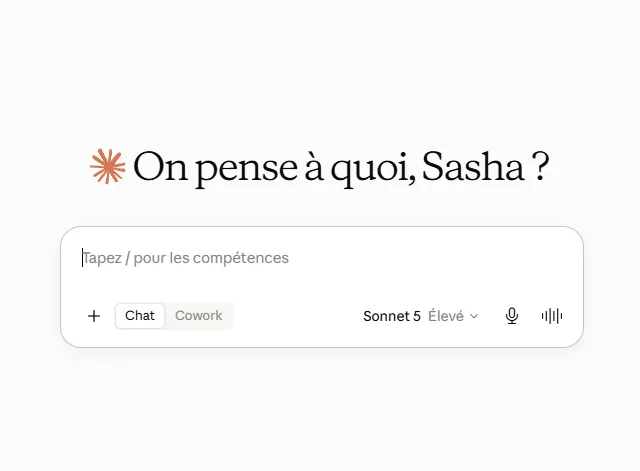
Claude is Anthropic's general-purpose AI assistant, available at claude.ai and through Claude Code, Claude Cowork, and browser/desktop integrations. It's not built specifically for advertising — it's a reasoning and writing engine that happens to be very good at advertising when you bring it the right inputs. Marketers use Claude for ad copy, hooks, persona research, campaign briefs, competitor analysis, email sequences, and increasingly for automating reporting and workflows through Claude Code.
What RiverFlow AI Is
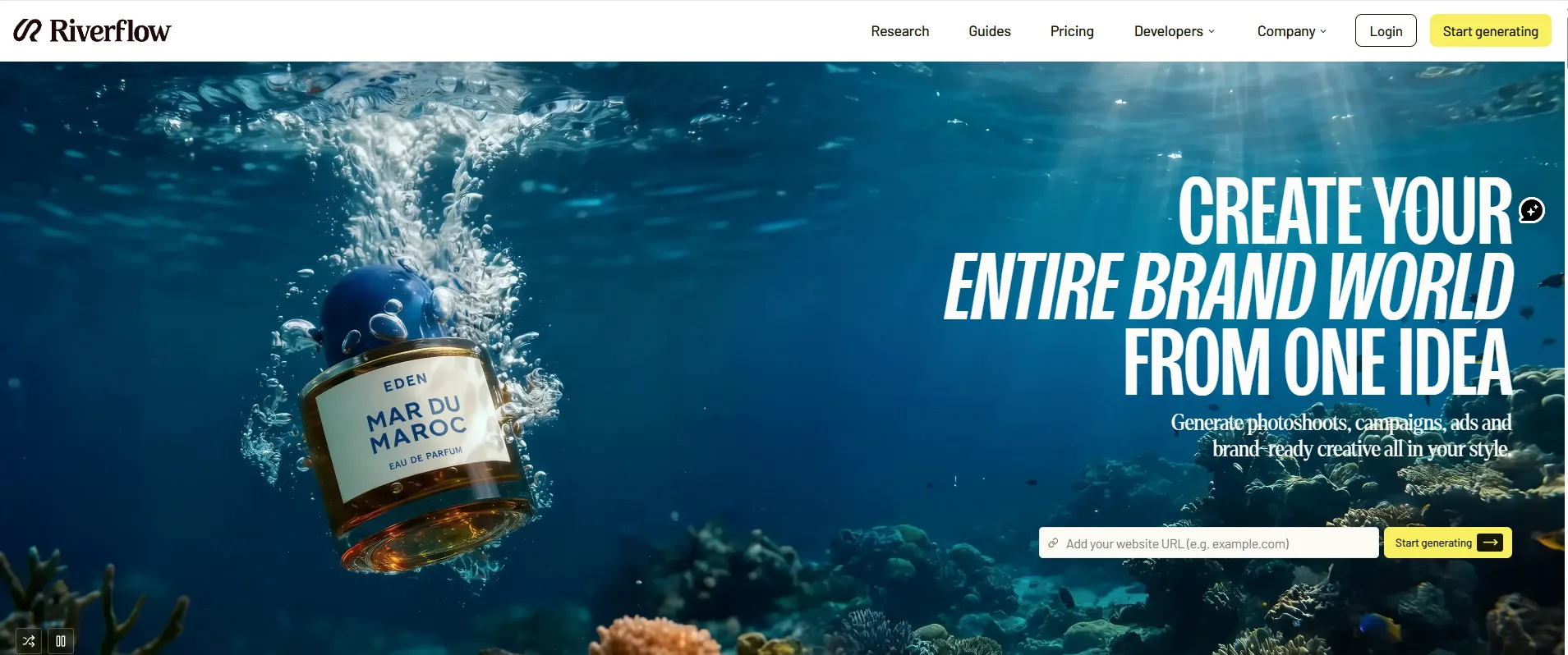
RiverFlow AI is a specialized creative-generation platform built for on-brand product photography, video, and ready-to-launch ads. Instead of a blank chat box, you train it on your brand — products, scenes, style rules, and reference assets — and it outputs campaign-ready static ads, lifestyle imagery, and short-form video that stay visually consistent with your brand across hundreds of variations. It runs on a credits system across Starter, Growth, and Scale plans, with custom Enterprise pricing for larger teams. New users can currently save 20% on any subscription tier through this link.
RiverFlow AI vs Claude: The Real Comparison
The Case for Claude in Ad Creative
Strengths:
- Strategy and ideation depth. Claude handles long-context work well — feed it a full brand guide, a stack of customer reviews, and a competitor's landing page in one go, and it can synthesize all of it into a coherent campaign brief.
- Copy quality at volume. Ask for 30+ headline variants around a single hypothesis (urgency, social proof, benefit-led) and Claude will hold a consistent brand voice across all of them instead of drifting after a few outputs.
- Automation beyond copy. Through Claude Code and Cowork, Claude can go past writing single prompts and actually build repeatable workflows — pulling campaign data, summarizing performance, and prepping the next round of briefs.
Weaknesses:
- No native ad-image output. Claude doesn't generate finished visual assets on its own. You can get a sharp headline and body copy, but turning that into a platform-sized, text-safe, ready-to-launch ad still means exporting to a design tool — or connecting a tool that does that part (more on this below).
- No built-in brand-asset memory. Claude doesn't natively store your product photos, scenes, or style rules the way a purpose-built creative platform does.
The Case for RiverFlow AI in Ad Creative

Strengths:
- On-brand consistency at scale. Because RiverFlow AI is trained on your actual products and style rules, it can produce dozens of campaign variations — product photoshoots, lifestyle scenes, static ads, short video — without the visual drift that generic image generators tend to have.
- Ready-to-launch formats. Ads and variations come out sized and structured for the channels you're actually running, rather than a generic square image you have to reformat by hand.
- Batch production. RiverFlow AI is built around running multi-output creative jobs (a full photoshoot, a set of ad variations, a batch of video cuts) rather than one asset per prompt.
Weaknesses:
- Narrower scope. It's a creative-production tool, not a strategy or copywriting assistant — you still need something (or someone) upstream deciding what to say before RiverFlow AI decides how it looks.
- Credit-based limits. Output is metered by credits per plan, so heavy production teams need to budget generation volume the way they'd budget ad spend.
The Verdict
If the honest answer is "I need to write and think," Claude wins. If it's "I need finished, on-brand visuals I can upload today," RiverFlow AI wins. But the more useful takeaway is that RiverFlow AI vs Claude isn't really an either/or decision — RiverFlow AI ships with a hosted MCP server built specifically to plug into Claude, which means the "use both" advice that usually closes out these comparisons is, in this case, a native feature rather than a workaround.
👉 Ready to try it? Claim your 20% discount on RiverFlow AI here before starting your first brand setup.
Claude AI for Ad Copy: What It's Actually Good At
Claude's real edge in advertising work isn't speed — most modern AI tools are fast. It's consistency and reasoning over a large amount of context. A few ways marketers are actually using Claude AI for ad copy in 2026:
- Persona and objection mapping. Feed Claude your product details, reviews, and support tickets, and ask it to extract the top three objections and the language customers actually use — then write hooks that answer those objections directly.
- Hook and headline batches. Structure the prompt with context, offer, proof points, and constraints, then ask for a fixed number of variants (e.g., "15 hooks under 120 characters, grouped by angle: problem-led, proof-led, curiosity-led").
- Channel-specific rewriting. The same core message needs different treatment on Meta, Google Search, TikTok, and LinkedIn. Claude can take one approved concept and adapt tone, length, and structure per channel in the same conversation.
- Landing page and ad alignment. Because Claude can hold both the ad copy and the landing page content in context at once, it's useful for catching mismatches between what the ad promises and what the page actually delivers.
The output is only as good as the brief, though — vague prompts produce generic copy regardless of which AI you're using.
RiverFlow AI for Ad Creative: On-Brand Images, Video & Ads at Scale
Where RiverFlow AI earns its place in the stack is turning an approved concept into a finished, testable asset. In practice, that covers:
- Product photoshoots staged in curated scenes from a natural-language brief, using your actual saved product references.
- Ad variations built from an approved hero image, each with a different copy hook while keeping product and brand treatment consistent — useful for the hook-testing framework most performance teams already run.
- Video and motion, turning an approved still into a short product video with camera movement and a clean final hold.
- Brand-consistent batches, so a summer campaign across five products still looks like it came from the same shoot.
This is the layer most general-purpose AI assistants, Claude included, simply don't cover on their own. It's also where the -20% discount matters most: start your RiverFlow AI subscription at 20% off here and the savings scale with you as you move from Starter to Growth.
Pricing Compared: Claude vs RiverFlow AI
| Claude | RiverFlow AI | |
|---|---|---|
| Free tier | Yes — limited daily usage | Not listed; paid plans start at Starter |
| Entry paid plan | Pro, $20/month | Starter — 2,250 credits/month (~225 images, 90 static ads, or 55 videos) |
| Mid tier | Max, $100–$200/month (5x–20x Pro usage) | Growth — 6,000 credits/month, 5 brand profiles, MCP access |
| Team plan | Team, from ~$20–25/seat/month | Scale — 16,000 credits/month, unlimited brand profiles |
| Enterprise | Custom pricing | Custom pricing |
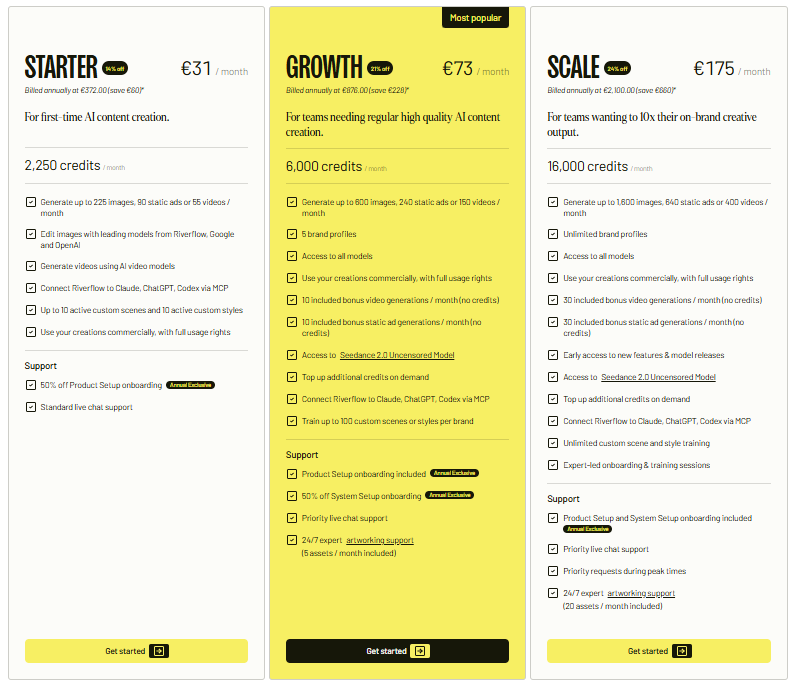
RiverFlow AI's plans are output-based (credits per image, ad, or video) rather than seat-based, so cost scales with how much creative you produce, not how many people are logged in. Use this link for -20% off any RiverFlow AI tier — it applies whether you're starting on Starter or jumping straight to Growth.
The Best Setup: Connect RiverFlow AI to Claude via MCP
This is the part most "vs" articles won't tell you: you don't have to choose. RiverFlow AI runs a hosted MCP (Model Context Protocol) server that connects directly to Claude, so you can plan a campaign, write the copy, and generate the finished visuals without leaving the same conversation.
How to connect RiverFlow AI to Claude:
- In Claude, open the custom connector settings (claude.ai/customize/connectors).
- Add a new connector named RiverFlow and paste RiverFlow's Claude-specific MCP endpoint (available from RiverFlow's MCP setup page once you're logged in).
- Authorize with OAuth, choose your RiverFlow team and brand, and select the scopes you want to grant.
- Once connected, you can ask Claude things like: "Create three campaign ads from our approved hero image, each with a different copy hook, keeping the product and brand treatment consistent."
From that point on, Claude handles the thinking (briefs, hooks, persona work) and hands the visual production step to RiverFlow AI without you switching tabs or re-explaining brand context. Billable RiverFlow actions still draw from your existing RiverFlow Credits — credits that go further if you sign up through our 20% discount link.
Choosing Between Claude and RiverFlow AI
- Choose Claude alone if your bottleneck is ideation, copy, or campaign strategy, and you already have a designer or a design tool to finish the visual side.
- Choose RiverFlow AI alone if your copy and angles are already locked and your bottleneck is producing on-brand visuals fast enough to keep up with testing volume.
- Connect the two if you want one workflow that goes from brief to finished ad without manual handoffs — this is increasingly the default setup for lean marketing teams and agencies managing several brands.
FAQ
Is RiverFlow AI better than Claude for ads? It depends on the job. Claude is stronger for ad copy, hooks, and campaign strategy. RiverFlow AI is stronger for producing finished, on-brand visual ads at scale. Most teams get the best result using both together rather than picking one.
Can I use RiverFlow AI and Claude together? Yes. RiverFlow AI offers a hosted MCP server built specifically to connect to Claude, so you can write copy and generate on-brand visuals from the same Claude conversation instead of switching between two separate tools.
Does RiverFlow AI generate ad copy, or just images? RiverFlow AI is primarily a visual creative engine — product photography, video, and static/video ads — though its ad-variation workflows do let you attach different copy hooks to an approved visual. For deeper copywriting and strategy work, Claude is the stronger tool.
Is Claude good for writing ad copy? Yes. Claude handles brand-voice consistency well across large batches of copy and can hold a full brand guide, competitor research, and past performance data in context at once, which is useful for writing on-strategy variations rather than generic copy.
How much does RiverFlow AI cost compared to Claude? Claude is priced per seat (Free, Pro at $20/month, Max at $100–$200/month, Team from roughly $20–25/seat/month). RiverFlow AI is priced on a credits system tied to output volume (Starter, Growth, Scale, and custom Enterprise plans) — and new subscribers get 20% off through go.riverflow.ai/RavenStack, so the right comparison depends on how much creative volume you're producing, not headcount.
Read More
- RiverFlow AI: What It Is and How to Use It to Create Better Ads Faster
- RiverFlow AI vs ChatGPT: Best AI for Ad Creation
- Top AI Ad Generators for 2026
Bottom Line
RiverFlow AI and Claude solve different halves of the same problem: Claude thinks, RiverFlow AI produces. Compared on their own, the choice depends on where your bottleneck actually is. Connected through RiverFlow's MCP server, they stop being competitors and start being a single ad-creative pipeline — which is probably the more useful way to frame this comparison for readers who just want to ship better ads faster.
👉 Get 20% off RiverFlow AI now and start building your first on-brand campaign today.